2026 Hong Kong Beauty Prepayment Consumer Regulations Complete Guide
7-Day Cooling-Off Period Legislation Progress, Industry Consensus, Law Enforcement Upgrades, Self-Protection Strategies

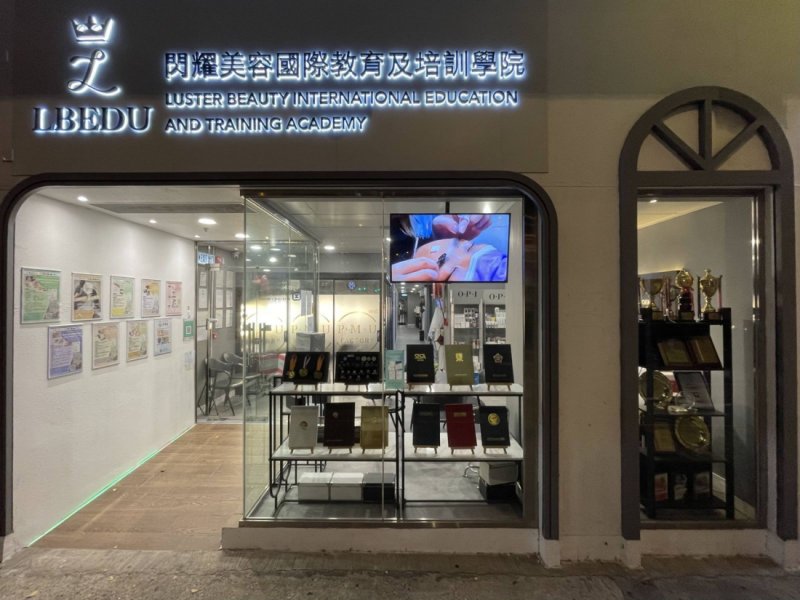
Written by: LBEDU Luster Beauty International Education & Training Academy
Hong Kong Two-Time QF Star-Rated Institution | Institution Code: IC:854

Updated: 3 July 2026 | Integrating the latest government consultation documents, Legislative Council developments, and IQA industry-wide seminar results

Hong Kong government launches public consultation on prepayment consumption, Legislative Council to review next week
Government officially launches public consultation on prepayment consumption, Legislative Council to convene for review next week

1. Executive Summary (Key Highlights)

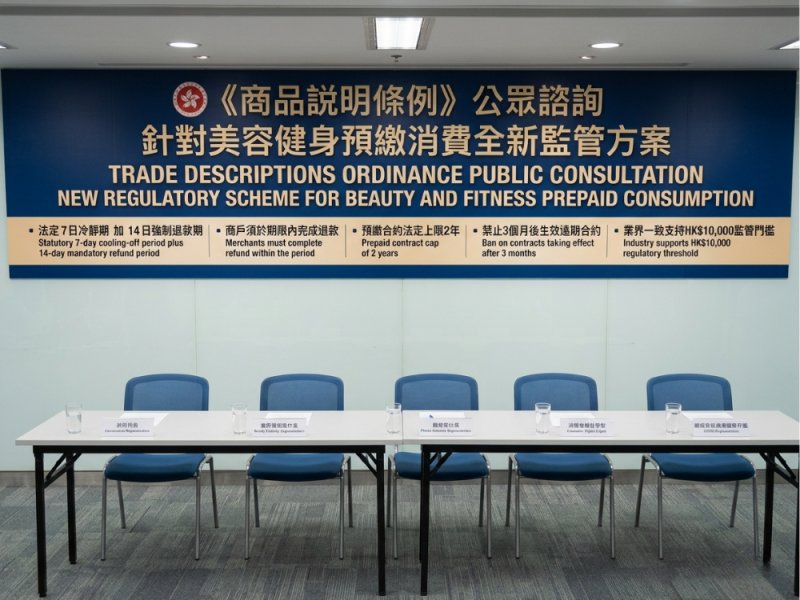
On 30 June 2026, the Hong Kong government officially launched a two-month public consultation on the Trade Descriptions Ordinance, introducing a new regulatory framework for prepayment-based consumption in the beauty and fitness industries. The proposal not only establishes a 7-day cooling-off period, a 14-day refund mechanism, and a two-year contract cap, but also introduces two major new provisions: a ban on forward contracts taking effect after 3 months, and an upgrade of enforcement powers under the Organised and Serious Crimes Ordinance.

The Legislative Council Panel on Economic Development will convene next week to review the relevant issues. The Consumer Council has publicly supported the new regulations, stating that the proposals fully align with its long-standing advocacy direction. Meanwhile, the International Qualifications Assessment Alliance (IQA) convened a virtual seminar with key representatives from Hong Kong's beauty industry. After multiple rounds of voting and in-depth debate, the industry overwhelmingly endorsed HK$10,000 as the golden threshold for prepayment regulation, replacing the government's original three-tier proposal.

Our Principal Joie Wong and Vice Principal Lawrance Wong participated fully in the IQA industry meetings, consolidating nine core issues and gathering frontline operational voices. They will attend a Legislative Council industry-specific meeting on Tuesday, 7 July 2026, from 2:30 to 4:00 PM to directly present the concerns of beauty SMEs to legislators and government officials, advocating for a balanced and practical regulatory framework.

2. The Five Core Regulatory Proposals (Complete Authoritative Version)

This government amendment targets the high-complaint prepayment sectors of beauty and fitness, introducing five major enhanced regulatory measures to comprehensively address long-standing market loopholes. This represents the most significant policy reform for the beauty industry in recent years:

1. Statutory 7-Day Cooling-Off Period + 14-Day Mandatory Refund Period

For all qualifying regulated prepayment contracts, consumers enjoy a 7-day unconditional cancellation period after signing. Merchants must complete the refund process within 14 days. If the consumer has already used part of the service during the cooling-off period, the merchant may deduct the service fee at the market standard rate, with the remaining amount fully refunded. This prevents unreasonable deductions and delayed refunds.

2. Three-Tier Official Regulatory Monetary Thresholds (Under Public Consultation)

Drawing on Customs data on beauty and fitness complaints from 2020–2025, the government has set three regulatory threshold options for public voting:

  • Option 1: HK$3,000 or above (covers 80% of complaint cases)
  • Option 2: HK$8,000 or above (covers 70% of complaint cases)
  • Option 3: HK$15,000 or above (covers 60% of complaint cases)

The purpose of setting a threshold is to target high-risk prepayment practices while avoiding excessive regulation of small daily transactions, balancing consumer protection with SME operational pressure.

3. Statutory 2-Year Cap on Prepayment Contracts

A complete ban on excessively long binding contracts. All beauty and fitness prepayment service contracts must not exceed a maximum term of 2 years, thoroughly addressing the chronic problem of 3-5 year long-term prepayments, merchant closures with debts, and consumers losing their money.

4. New Ban: Forward Contracts Taking Effect After 3 Months

This amendment introduces a key provision prohibiting merchants from signing prepayment contracts that take effect more than 3 months after the signing date. Targeting the high-risk pre-sale model of "pay now, service later after half a year," this eliminates long-cycle prepayment loopholes at the source, significantly reducing consumer financial risk.

5. Comprehensive Law Enforcement Upgrade, Inclusion in Serious Crimes Regulation

The government has significantly upgraded enforcement mechanisms by including the offence of "improperly accepting prepayment" under the Trade Descriptions Ordinance in the Schedule of the Organised and Serious Crimes Ordinance. This empowers Customs with new enforcement powers, including the ability to apply to the court for property restriction orders to freeze assets of non-compliant merchants, substantially increasing deterrents against malicious fraud, business closures with debts, and high-pressure sales tactics.

3. Official Positions of the Legislative Council and Consumer Council

1. Legislative Council: Formal Review Next Week, Seeking Public Input to Refine Details

The Legislative Council Panel on Economic Development will hold a special meeting next Tuesday to review the prepayment consumption amendment proposal. DAB Legislative Council member Mr. Holden Chow Ho-ding has publicly supported the new regulations, stating that the two-month consultation period is sufficient to gather diverse views and balance interests.

Lawmakers specifically noted that the poor sales practices of a few "black sheep" in the beauty and fitness industries have long damaged the overall industry reputation. This amendment can effectively rectify market chaos, protect legitimate operators, and promote healthy industry development. They also suggested that the government refine details such as the cooling-off period duration and threshold settings after gathering public opinion.

2. Consumer Council: Full Support, Fully Consistent with Long-Standing Advocacy

The Consumer Council has officially endorsed the government's new regulatory proposal, stating that the 7-day cooling-off period, mandatory refunds, and contract regulations are completely aligned with the Council's years of advocacy.

The Consumer Council believes the new rules can effectively prevent consumers from making impulsive, misguided, or coerced prepayments, reducing numerous consumption disputes. They also lower the barrier for consumers to protect their rights, allowing lawful contract cancellation and refunds without complex litigation, thereby enhancing the overall fairness of Hong Kong's consumer market. The Council will submit formal written comments during the consultation period and will continue to monitor market dynamics and strengthen consumer education.

4. IQA Industry-Wide Online Seminar | Industry Final Consensus (Latest Key Results)

To present the most authentic and operationally relevant industry views to the government, the IQA convened a special online meeting with Hong Kong beauty industry council members, experienced principals, training sector representatives, and studio owners. Our Principal Joie Wong and Vice Principal Lawrance Wong attended the entire discussion, voting, and opinion consolidation process.

The meeting offered five threshold options: HK$3,000, $8,000, $10,000 (added as an extra option), and $15,000. After multiple rounds of data analysis, scenario simulation, and debate, participants overwhelmingly supported HK$10,000 as the most appropriate regulatory threshold.

Why the Industry Unanimously Supports the HK$10,000 Golden Threshold
  • Precise risk differentiation: Amounts below HK$10,000 typically cover single treatments, quarterly light packages, and small nail/lash services, which are everyday discretionary expenses requiring minimal administrative oversight. Amounts above HK$10,000 are concentrated on long-term specialised treatments, annual equipment packages, and premium skin management — the high-risk areas where complaints, defaults, and high-pressure sales have historically occurred.
  • Protects small neighbourhood shops: Avoids low thresholds like $3,000 or $8,000 that would burden small shops with excessive compliance paperwork, significantly reducing pressure on grassroots beauty studios and preserving diversity in the industry.
  • Does not weaken consumer protection: Compared to the higher $15,000 threshold, it covers the vast majority of high-risk prepayment contracts without creating regulatory gaps, perfectly balancing consumer rights and industry ecology.
  • Aligns with Hong Kong market spending habits: Matches consumer budgets and mainstream beauty salon package pricing, representing the most acceptable balance for consumers, SMEs, and chain institutions.

5. Historical Participation Views of Senior Industry Representatives

Vice Principal Lawrance Wong's Core Positions in Previous Cooling-Off Period Consultation Meetings

In both the first public consultation on the statutory cooling-off period for beauty services in 2019 and the October 2024 government consultation on prepayment regulation, Vice Principal Lawrance Wong participated as a beauty industry representative, voicing grassroots perspectives from the viewpoint of physical salon operations. His positions consistently favoured maintaining a healthy operational environment for the industry:

  • Questioning the necessity of blanket mandatory legislation: He argued that not all consumption disputes that have occurred should be addressed through mandatory laws. Once mandatory regulations are introduced, the industry will simply adjust its operations and sales techniques to circumvent the rules, failing to address root causes and only creating more alternative business models, increasing regulatory difficulty and disputes.
  • Advocating voluntary industry charters instead of mandatory legislation: Citing successful flexible management models such as the Labour Department's Good Employer Charter and the Environmental Protection Department's voluntary microbead elimination charter, he suggested the government take the lead in collaborating with major beauty industry associations, training institutions, and legitimate shops to develop a voluntary industry charter. This would rely on industry self-commitment, reputation certification, and market credibility rather than blanket legal restrictions, protecting consumer rights while providing operational flexibility for businesses.
  • Noting that the timing for new legislation was not yet mature: At both the 2019 and 2024 meetings, the market lacked comprehensive supporting conditions: no clear unified dispute accounting data, no standardised refund calculation methods, no clear service category regulatory details, and all implementation methods, definitions, and violation handling mechanisms were still blank. Rushing legislation without sufficient data and an established enforcement framework would likely result in vague provisions, implementation confusion, and SMEs struggling to comply.
  • Advocating establishing industry standards before legal regulation: Prioritise unifying refund standards, service classifications, and prepayment caps, improve internal industry self-regulation, and only after accumulating sufficient market data and implementation experience should regulatory provisions be refined progressively — ensuring they are evidence-based and grounded in frontline operational reality.

6. Industry Training Team's Frontline Teaching and Service Forecast on Cooling-Off Provisions

Our Principal Joie Wong, Vice Principal Lawrance Wong, and Director of Training Ms. Tse Shuk Ying, together with our professional beauty training team, have long provided training on customer service, contract standards, and consumer provisions to practitioners. We have systematically and clearly explained cooling-off rules, refund terms, and frontline service standards in our daily teaching and industry sharing.

Based on years of industry training and market service experience, our team makes a clear forecast: if the government formally implements this amendment, the new cooling-off and refund provisions will be more detailed, standardised, and structured than previous versions, covering more service scenarios and dispute details. At the same time, as public awareness of the new law increases, consumers will become more familiar with cooling-off periods, refund mechanisms, and related rights provisions. They will also more actively and rigorously require beauty practitioners to explain all contract and refund details clearly.

This means the professional service requirements for beauty practitioners will be comprehensively upgraded. "Clearly explaining regulatory provisions, standardising contract disclosure procedures, and professionally answering client rights questions" will become standard requirements for frontline service. This will drive the entire industry to improve service professionalism and transparency, ending the previous model of vague explanations, hidden terms, and information asymmetry. Our institution will continue to update our training system to keep pace with the new law's details, helping Hong Kong beauty practitioners adapt to new regulations, operate compliantly, and deliver professional service.

7. Views from Multiple Industry Organisations

Ms. Yeung Pui Sum
Yaffa Soft Glow Studio

Proposed Refund Calculation Formula:

Refund Amount = Total Contract Value - Market Value of Services Used - Actual Cost of Opened Gift Products - Cost of Gift Treatments Used - 5% Administrative Fee of Total Contract Value

We advocate charging a 5% administrative fee, not as a penalty, but to cover actual operational expenses such as credit card transaction fees, client data system registration and verification, and contract archiving. This compensates SMEs for unavoidable basic costs while reasonably discouraging arbitrary malicious cancellations, balancing the rights of both parties and preventing unnecessary losses for legitimate shops. We also recommend that the government clearly specify standards for deducting gifts and complimentary treatments, unifying industry accounting standards and reducing disputes.

Ruby's Nail and Eye Care (RNEC)
Industry Opinion

Five Core Requests:

  • Relax regulation of small prepayments in light beauty services: Nail, lash, and eye care services are daily light consumer expenses with low amounts and flexible cycles. Most customers prepay less than HK$10,000. We fully support the industry's HK$10,000 threshold proposal, hoping the government will classify light beauty prepayments below HK$10,000 as flexible management scope, without mandatory complex written contracts and strict approval processes — fitting the operational model of street-level studios and professional nail/lash salons.
  • Refine cooling-off period implementation rules for service types: Nail and lash services are immediate, irreversible customised services. Once completed, they cannot be resold. We recommend the government establish specific provisions for such services: if a customer applies for a cooling-off refund after completing a full custom service, the service fee should be fully deducted at the salon's standard rate, preventing consumers from cancelling after enjoying the service and harming practitioners' work.
  • Support reasonable administrative fee mechanisms: We fully agree with the industry proposal for a 5% basic administrative fee. In daily operations, we handle numerous prepayment orders, and platform transaction fees, booking system management, and material preparation incur fixed costs. A reasonable administrative fee reduces operational pressure on micro-businesses while preventing some customers from exploiting cooling-off rules to repeatedly place and cancel orders, disrupting normal operations.
  • Support contract time limits and forward contract bans: We fully endorse the maximum two-year prepayment contract cap and the ban on forward contracts taking effect after three months. Light beauty customers have higher mobility, and overly long packages often lead to subsequent cancellations or disputes when changing salons. Unified time limits protect consumer funds while enabling salons to plan stable business models and promote orderly light beauty market development.
  • Call for dedicated compliance guidance for micro-businesses: Compared to large beauty institutions, nail and lash micro-businesses lack professional legal teams and struggle to quickly understand new regulations. We urge the government, in collaboration with industry associations, to produce simplified compliance handbooks and free standard contract templates specifically for nail, lash, and hand/foot care sectors, reducing compliance difficulty for grassroots practitioners.

8. Nine In-Depth Discussion Topics from the Meeting (Complete Industry Opinion Record)

The meeting lasted nearly 3 hours. Beyond the threshold vote, participants engaged in deep discussions on nine major topics including implementation loopholes, compliance details, and industry development, resulting in comprehensive industry recommendations:

  • Regulatory threshold optimisation: After comprehensively comparing the pros and cons of five threshold amounts, participants unanimously rejected both excessively low thresholds (over-regulation) and excessively high thresholds (regulatory failure), confirming HK$10,000 as the optimal proposal and recommending the government consider it as a core consultation reference.
  • 7-day cooling-off period implementation details: Industry consensus reached: cooling-off period begins from the contract signing date; 14-day refund period calculated on working days; services used during the cooling-off period deducted at standard per-unit rates, not discounted package rates; electronic payment processing fees borne by merchants, not passed to consumers. Also incorporated gift deductions and a unified 5% reasonable administrative fee standard from various SMEs.
  • Two-year contract cap supporting provisions: Maximum contract term of two years; renewals treated as new contracts with the cooling-off period reset; key recommendation for anti-splitting clauses — multiple prepayment contracts from the same customer within 30 days combined for threshold calculation, preventing merchants from avoiding regulation through split transactions.
  • Closing the loophole of business name changes: All representatives emphasised: regulatory scope should not be defined by shop names but by actual service nature. Regardless of whether businesses rename as health management centres, wellness studios, skin consultants, or body contouring studios, if they provide beauty care, equipment treatments, nail/lash services, they must all be regulated, completely closing the loophole.
  • SME compliance support policies: Industry recommends the government provide free standardised contract templates, compliance guides, and free training to address the pain point that small studios, individual beauticians, and nail/lash practitioners cannot afford legal costs and may unintentionally violate regulations.
  • Strengthening regulation of improper high-pressure sales: Proposals to explicitly prohibit "limited-time today-only offers," "buy now or price increases," and "intimidating or misleading sales tactics" in the ordinance, distinguishing normal marketing from improper practices and reducing disputes at the source.
  • Consumer protection when businesses close or change ownership: Addressing chronic issues of closures and new owners refusing old contracts, the industry explored options such as prepayment escrow, industry compensation funds, and mandatory contract succession upon transfer, with further refinement to follow.
  • Differentiated regulation for certified institutions: Proposal to implement a "positive incentive mechanism" where institutions holding IQA, ITEC, VTCT international certifications, recognised beauty salon accreditations, and maintaining long-term transparent contracts receive compliance flexibility benefits, encouraging proactive professionalism rather than reactive regulation.
  • Industry long-term professionalisation support: As regulation tightens, the industry will transition from a "sales-driven prepayment" model to a "professional skills and qualification reputation" model. The industry recommends the government expand CEF subsidy coverage for beauty professional courses, encouraging practitioners to obtain official and international qualifications, driving industry-wide upgrading.

9. 5-Year Complaint Data | Real Market Issues Behind the Amendment

According to Consumer Council official statistics from 2021 to 2025, beauty and fitness prepayment consumption has consistently ranked among the top complaint categories:

Approx. 1,800 cases Beauty services annual average prepayment-related complaints

Approx. 1,200 cases Fitness services annual average prepayment-related complaints

Over HK$100 million Annual disputed amount across both industries

Main dispute scenarios: sudden business closures or transfers, high-pressure prepayment inducement, hidden contract terms, no refund available, and long-term contract lock-in. This amendment precisely targets these market problems for comprehensive rectification.

10. Before New Law Takes Effect | 3 Practical Self-Protection Methods for Consumers

The process from consultation to legislation to implementation is expected to take 12–18 months. During this window, consumers can protect themselves through the following measures:

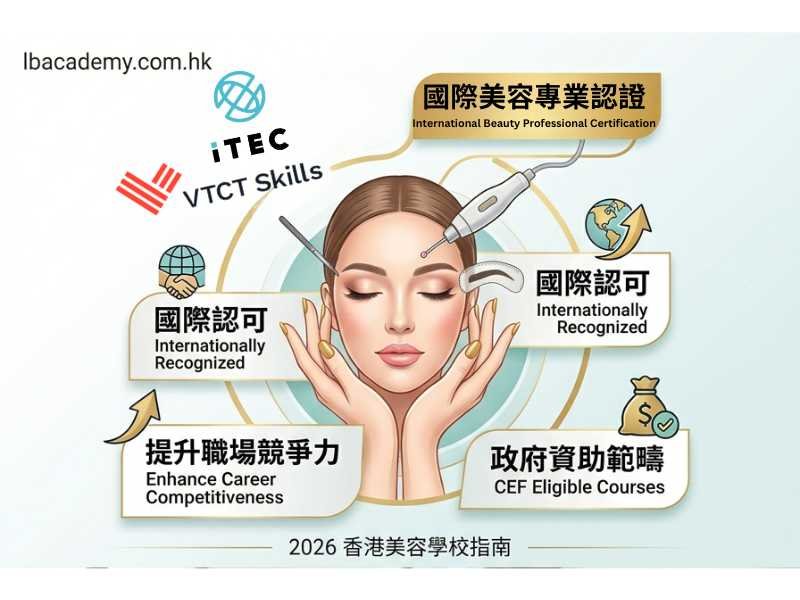
  • Prioritise practitioners with international certification qualifications: Hong Kong's beauty industry has no mandatory registration system. ITEC, VTCT, IQA and other international certifications are core standards of professionalism and trustworthiness. Properly trained practitioners will proactively disclose equipment information, service contraindications, and post-treatment risks, significantly reducing service disputes.
  • Choose IQA World or Foammall QS certified beauty salons: Certified salons undergo third-party professional audits covering teacher qualifications, equipment legitimacy, medical-grade hygiene, contract transparency, and complaint handling mechanisms. Certification records are publicly verifiable, allowing real qualifications to be traced even if a merchant changes its name.
  • Four principles when signing contracts: Refuse on-site time-pressure sales; do not sign forward contracts taking effect after 3 months; avoid large one-off prepayments (recommend short-term packages within 6 months); ensure all service risks and refund terms are documented in writing; keep complete copies of contracts, receipts, and conversation records.

11. Industry Future Development Watershed: Professionalism Determines Survival Space

After the new regulations take effect, Hong Kong's beauty market will polarise completely:

  • Grey-market operators: Those relying on high-pressure sales, frequent name changes to avoid regulation, and practitioners without professional qualifications will gradually be eliminated through accumulating complaints and enforcement actions, with shrinking survival space.
  • Legitimate professional practitioners: Those holding international certification qualifications, operating with transparent contracts, and building their business on skills and reputation will gain consumer trust and market premium, becoming the industry mainstream.

The future core competitiveness of the beauty industry will no longer be sales techniques, but professional qualifications, technical competence, and compliant operations. Entering the industry through further study and obtaining formal certifications will become essential for practitioners.

12. LBEDU Official Position and Industry Participation

As a two-time QF Star-rated institution in Hong Kong, LBEDU has always adhered to "promoting positive industry development through professional education," proactively driving industry upgrading rather than relying on reactive regulatory compliance:

  • Offering only HKQF, ITEC, VTCT, and IQA official/internationally accredited courses to ensure qualification value for students;
  • Actively promoting IQA and Foammall professional beauty salon certification systems to establish positive industry standards;
  • Fully participating in industry policy discussions, truly reflecting frontline SME and practitioner voices, and continuously improving training standards for customer service and contract explanation.

Key Event Announcement: Our Principal Joie Wong, Vice Principal Lawrance Wong, and Director of Training Ms. Tse Shuk Ying will attend a Legislative Council industry-specific meeting with Hon. Mr. Shiu Ka-fai on Tuesday, 7 July 2026, from 2:30 to 4:00 PM. They will directly submit industry recommendations to the Legislative Council and government departments on cooling-off period details, threshold settings, loophole closure, SME protection, and practitioner service standard training.

13. Frequently Asked Questions (FAQ)

Q1: When will the new 7-day cooling-off period officially take effect?
Currently in a two-month public consultation period, with the Legislative Council set to review it next week. There is no definitive legislative timeline yet; the industry estimates 12–18 months to complete all legislative and implementation procedures.
Q2: What is the most supported regulatory threshold in the industry?
After voting at the IQA industry-wide meeting, the overwhelming majority of representatives supported HK$10,000 as the golden threshold for prepayment contract regulation.
Q3: What new provisions are included in this amendment?
Two major new provisions: a ban on forward contracts taking effect after 3 months, and the inclusion of improper prepayment offences under the Organised and Serious Crimes Ordinance, allowing Customs to freeze assets.
Q4: What are the Consumer Council and Legislative Council's positions on the new regulations?
The Consumer Council fully supports the new regulatory proposals. Legislators endorse the direction, believing it can rectify market chaos and protect legitimate merchants while gathering public input to refine details.
Q5: How can I safely patronise beauty salons before the new law takes effect?
Choose legitimate beauty salons with internationally certified staff and recognised accreditation. Avoid large long-term prepayments and forward contracts. Carefully review contract terms and keep all transaction records.
Q6: What items are included in the industry's unified refund calculation?
Unified calculation deducts from the total contract value: used service fees, consumed gift products and complimentary treatments, plus a 5% basic administrative processing fee to cover the merchant's operational costs.
Q7: What specific policy requests does the nail and lash industry have?
They seek specific deduction rules for irreversible customised services, relaxed small prepayment regulatory processes, and dedicated compliance guidelines and simplified contract templates for micro light-beauty businesses.
Q8: What was the core opposition from the industry in earlier cooling-off period consultations?
Vice Principal Lawrance Wong raised at both the 2019 and 2024 meetings that the market lacked complete data and implementation plans at that time, and mandatory legislation would only cause the industry to change its operational tactics. He suggested adopting voluntary charter models for industry self-regulation, which would be more suitable for the market environment at that time.
Q9: What new service requirements will the new law impose on beauty practitioners?
With more detailed provisions and increased consumer awareness of rights, clients will more strictly require practitioners to clearly explain cooling-off periods, refunds, and contract details. Practitioners must possess professional contract explanation capabilities and standardised service processes. Customer service and contract explanation will become essential professional competencies.

Sources

Commerce and Economic Development Bureau: Trade Descriptions Ordinance Prepayment Consumption Public Consultation Document (2026)

RTHK 881903 Legislative Council Latest News Reports

Consumer Council Official Response Statement and 2021–2025 Complaint Data Report

IQA International Qualifications Assessment Alliance 2026 Mid-Year Industry-Wide Seminar Meeting Records

Sing Tao Headline Prepayment Consumption Regulation Latest Policy Reports

Legislative Council Panel on Economic Development Meeting Agenda Documents

2019 First Round Beauty Cooling-Off Period Public Consultation Meeting Records

October 2024 Prepayment Consumption Regulation Industry Seminar Vice Principal Lawrance Wong's Speech Records

Yaffa Soft Glow Studio, Ruby's Nail and Eye Care (RNEC) Frontline Salon Operational Opinions

LBEDU Department, Director, and Training Instructors Industry Service Training Summary and Market Forward Analysis

#HongKongBeautyPrepaymentRegulations #7DayCoolingOffPeriod #BeautyIndustryRegulation #IQAIndustryConsensus #LBEDU #BeautyConsumerRights #PrepaymentConsumption #BeautyIndustryCompliance