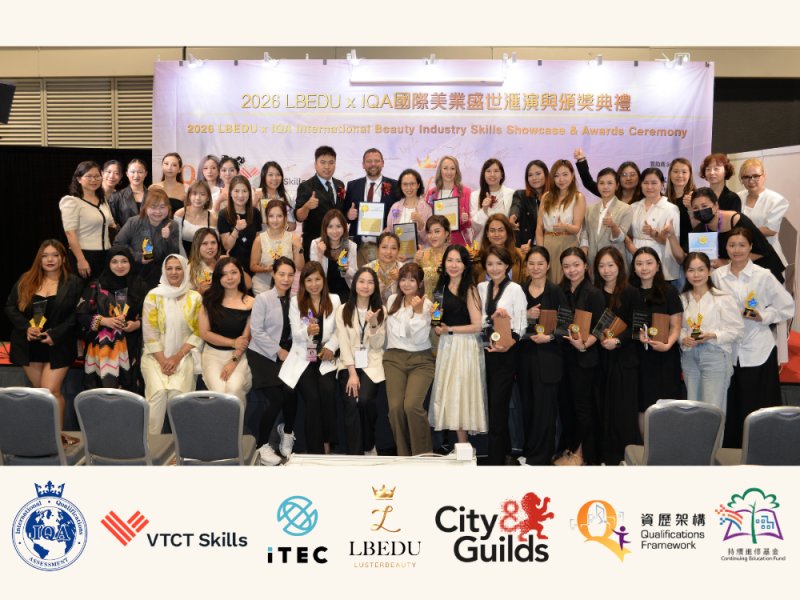
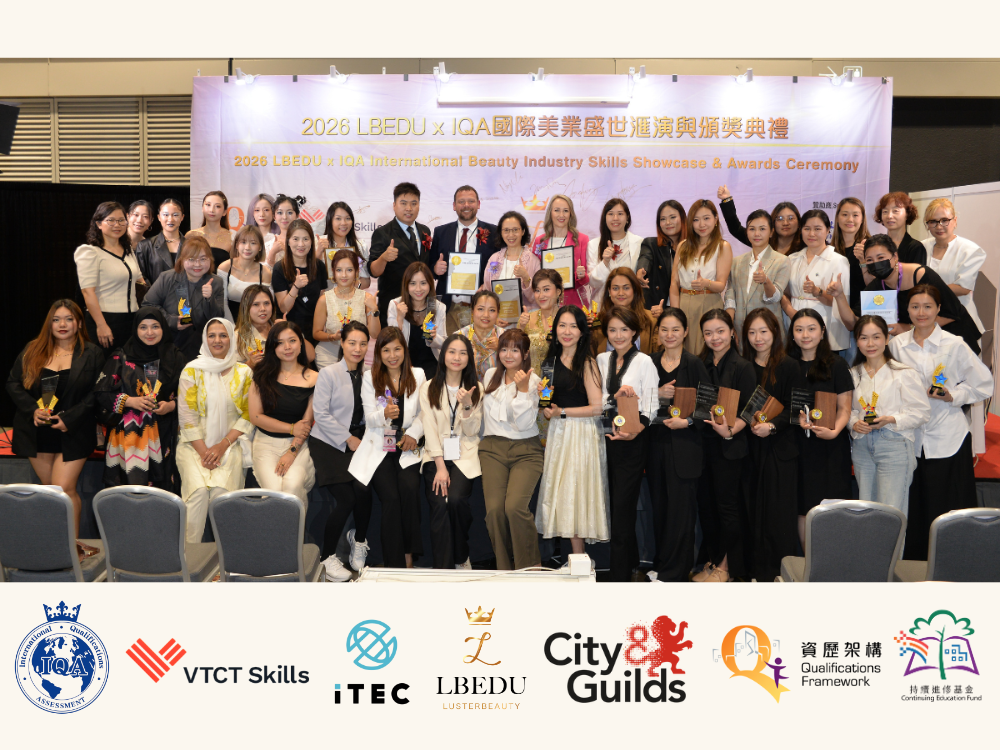
- ‧ The six major beauty qualifications in Hong Kong include HKQF, VTCT, ITEC, LBEDU Academy Certificate, IQA, and City & Guilds.
- ‧ HKQF is an official qualification framework regulated by the Hong Kong government, eligible for CEF funding, ideal for long-term local career development.
- ‧ VTCT, ITEC, and City & Guilds are internationally recognized qualifications that facilitate entry into high-end medical aesthetic centres or overseas markets.
- ‧ The LBEDU Academy Certificate focuses on local practical skills, making it the top choice for beginners seeking rapid employment.
- ‧ IQA International Certification is an advanced credential for experienced professionals aiming to become beauty instructors or industry assessors.
- ‧ Beginners are advised to start with the LBEDU Certificate and progressively pursue HKQF or international qualifications.
- ‧ Career progression can be mapped from practical skills to international credentials and finally to high-level teaching and assessment roles.
- Hong Kong's six major beauty certifications serve distinct purposes: HKQF as government-regulated qualification, VTCT and ITEC as international authorities, LBEDU for local practice, IQA for instructor accreditation, and City and Guilds as century-old vocational认证. Beginners should start with LBEDU Academy Certificate for quick entry, while experienced practitioners transitioning to teaching roles should pursue IQA certification. Progressive qualification accumulation leads to sustainable career growth.
Which Certification to Choose? 2026 Hong Kong Beauty Certification Guide for Different Career Paths
To build a career in the beauty industry, practical skills alone are not enough. Holding professional certifications that align with your career development plan is essential for finding work, salary progression, starting your own business, expanding to overseas markets, or advancing to industry judging and instructor roles.
Many students preparing to enter the beauty industry, change careers or pursue further training are curious about the various qualifications available, including ITEC, VTCT, HKQF, LBEDU, IQA and City & Guilds. This article objectively analyses the attributes and advantages of each credential from multiple perspectives, including accreditation positioning, learning features, assessment methods, employment scenarios and long-term development, helping you plan the most suitable study path according to your time, budget and career goals.
Different institutions offer courses and qualifications with distinct positioning. Each type of certificate serves different applications and development areas. We respect our peers and maintain a spirit of friendly exchange, objectively sharing the true attributes and target audiences of each major certification to help students make informed choices.
1. Six Certifications — Basic Positioning
| Certification | Full Name | Core Positioning | Main Study Areas | Target Audience |
|---|---|---|---|---|
| HKQF | Hong Kong Qualifications Framework | Hong Kong Official Regulatory Qualification | Skin Care, Aromatherapy Massage, Nail & Makeup, Equipment Operation, Tattooing & Lash Extension, Teaching & Training | Working professionals, recent graduates, homemakers |
| VTCT | Vocational Training and Charitable Trust | Internationally Recognised Authority | Medical Aesthetic Equipment, Camouflage Art, Skin Tone Reconstruction, Aromatherapy, Semi-Permanent Makeup | Large chains, medical aesthetic centres, overseas development |
| ITEC | International Therapy Examination Council | Classic Internationally Recognised Qualification | Beauty Care, Styling & Makeup, Aromatherapy & Wellness, Laser Treatments | SMEs, Macau, Mainland China markets |
| LBEDU | Luster Beauty International Education | Local Practice-Oriented Qualification | Laser Treatments, Eyelash Extensions, Nail Art, Semi-Permanent Makeup, Body Painting | Complete beginners, entry-level beauty practitioners |
| IQA | International Qualifications Assessment Alliance | Industry Instructor & Assessor Authority | Teaching Methodology, Curriculum Design, External Assessment, Quality Assurance | 3+ years experience, transitioning to instructor or assessor roles |
| City & Guilds | City and Guilds of London Institute | Century-Old Vocational Skills Authority | Beauty Care, Hair Styling, Aromatherapy, Skin Management | International brands, overseas employment, multinational chains |
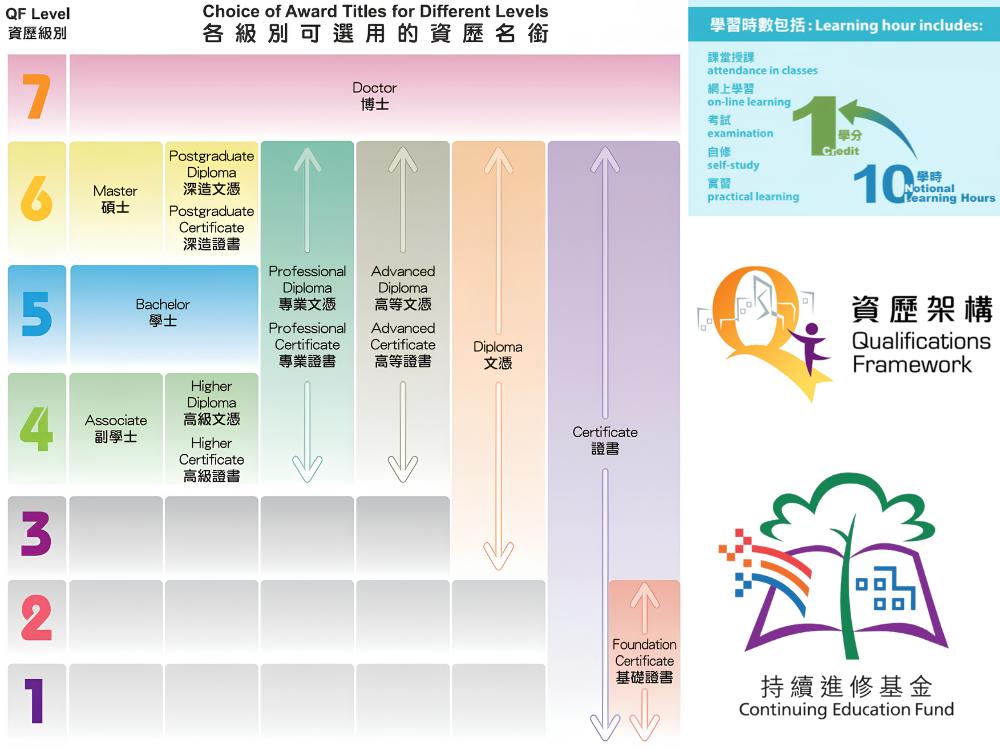
HKQF is regulated by the Hong Kong Government's Qualifications Framework Secretariat. Courses are designed according to the "Hong Kong Beauty Industry Competency Standards" and are closely aligned with local business operations and employer requirements. The framework is divided into seven levels from Level 1 to Level 7, comprehensively covering skin care, aromatherapy massage, nail and makeup, equipment operation, semi-permanent makeup, eyelash extension, teaching and quality assurance. All approved courses are listed on the government's Qualification Register with publicly verifiable registration numbers, and are widely recognised by government departments and industry stakeholders across Hong Kong.
As a two-time QF Star-rated institution in Hong Kong, LBEDU is also an officially recognised HKQF registered assessment centre. All qualification courses offered strictly adhere to government-established competency standards. HKQF also fully integrates with the CEF funding scheme, with most courses eligible for fee reimbursement, significantly reducing the financial burden of further study. Additionally, the framework offers Recognition of Prior Learning (RPL) services, allowing experienced practitioners who have not yet obtained formal qualifications to apply for matching official qualifications through skills assessment.
VTCT Skills enjoys high recognition in the UK, Europe, Hong Kong and Mainland China. Its qualifications are recognised in multiple countries worldwide and fall under the UK Qualifications Framework regulatory system. Courses range from basic care to advanced medical aesthetic equipment, camouflage art, skin tone reconstruction, semi-permanent makeup, aromatherapy and clinical aesthetics. Many large beauty chains, medical aesthetic centres and high-end spas in Hong Kong highly value this qualification, making it a popular choice for practitioners planning to develop their careers overseas.
ITEC is a long-established international beauty authority and one of the first overseas beauty certifications to enter the Hong Kong market, with a strong industry reputation built over many years. Courses cover professional beauty care, styling and makeup, aromatherapy and laser treatments. The qualification enjoys stable and reliable recognition in local SMEs, the Macau market and Mainland China, and is also a common reference qualification for those advancing to instructor roles or industry assessment work.
The LBEDU Academy Certificate is a practice-oriented skills credential designed specifically for the Hong Kong beauty market. The curriculum closely follows daily work processes and salon operations, with a strong practical focus. Many local SMEs, nail and lash studios, and tattoo studios highly recognise certificates issued by LBEDU when recruiting entry-level technicians.
Courses emphasise practical application, refining essential daily skills to help students quickly acquire job-ready capabilities. With flexible study schedules and a straightforward certification process, it is ideal for complete beginners who want to enter the workforce and gain experience as soon as possible. Whether in laser treatments, eyelash extensions, nail art, basic skincare, semi-permanent makeup or body painting, students who complete training and pass assessments will receive corresponding professional skills certificates, serving as valid credentials for local job applications.
IQA specialises in global beauty qualification auditing, professional instructor certification, and industry teaching standard setting. Its positioning differs from entry-level skills certificates — it is a mid-to-senior level professional qualification. The certification is designed specifically for practitioners who wish to deepen their involvement in beauty education, become training instructors, serve as external assessors, or participate in quality assurance. Standards align with international teaching systems and local industry regulations. Holding an IQA qualification commands high professional credibility whether applying for instructor positions at accredited training academies, serving as course assessors, or participating in industry research and development. It is ideal for experienced practitioners with years of industry background who wish to transition into teaching or assessment roles.
City & Guilds is a UK-based vocational skills authority with over a century of history. Its qualifications are recognised in more than 80 countries worldwide, making it one of the most widely accepted vocational skills systems internationally. Beauty, hairdressing and service industry courses follow rigorous standards with a strong focus on practical workplace skills. Many international beauty counters, chain beauty groups and overseas employment platforms in Hong Kong highly regard this qualification. For practitioners planning to develop their careers in Commonwealth countries, Europe or Southeast Asia, or aiming to join international beauty brands, it is an exceptionally competitive qualification choice.
.png)
2. Six Certifications — Assessment Mechanisms
| Certification | Assessment Model | Internal Assessor Role | External Assessor Role | Assessment Standards |
|---|---|---|---|---|
| HKQF | Combined Internal-External | Daily evaluations, progress assessments | Final practical assessment, comprehensive evaluation | Hong Kong Official Industry Standards |
| LBEDU | Internal Assessor Led | Daily scoring, practical assessments, final review | External consultant spot checks and supervision | Academy's Unified Teaching Standards |
| ITEC | Official External Assessor | Daily teaching, mock training, pre-exam coaching | Theory invigilation, practical scoring | Global Unified Assessment Standards |
| VTCT | Official External Assessor | Basic learning support assessment | Core certification, quality evaluation, result issuance | UK Headquarters Rigorous Standards |
| IQA | International + Local Combined | Technical qualification review | Teaching ability, curriculum design, professional vision assessment | International Beauty Education System |
| City & Guilds | Official External Assessor | Daily teaching, mock training | Theory invigilation, practical scoring | Global Vocational Skills Standards |
Conducted jointly by LBEDU internal professional assessors and external industry consultants. Daily progress and formative assessments are managed by internal assessors, while final practical assessments and comprehensive qualification evaluations involve senior industry professionals and QF-recognised consultants to ensure alignment with official requirements.
Core assessments are conducted by the Academy's registered internal professional assessors, responsible for daily scoring, practical assessments and final reviews. External consultants are regularly invited for spot checks and teaching supervision to maintain consistent teaching standards and assessment quality.
Both use the same assessment model — final evaluations are conducted by official external assessors dispatched by the respective authorities. The Academy handles daily teaching and mock training, while theory invigilation and practical scoring are carried out exclusively by external assessors, strictly following global unified standards.
Core qualification certification and quality assessment are managed by external assessors dispatched by VTCT UK headquarters. Basic learning components may be supported by internal assessors, but final results and qualification issuance are determined exclusively by external assessors, with particularly rigorous standards for advanced courses.
Employs a combined assessment model featuring senior international assessors from headquarters and local industry experts. As a high-level professional qualification assessment, it reviews not only technical competence and industry experience but also teaching ability, curriculum design thinking and professional judgment. Final certification is confirmed by international assessors appointed by the Alliance.
3. Comprehensive Advantages & Application Scenarios
| Certification | Local Job Market Applicability | CEF Funding | Learning Difficulty | Business Suitability | Overseas Market Development |
|---|---|---|---|---|---|
| HKQF | Widely accepted across all beauty sectors, clear advantage for promotions | Most widely covered | Progressive learning | Essential for locally licensed salons | Recognised in Mainland China |
| VTCT | Large chains, medical aesthetic centres, high-end spa positions | Select advanced courses | Rigorous assessment | Elevates high-end medical aesthetic salon positioning | Preferred in Europe, UK, Australia |
| ITEC | Industry-wide acceptance, versatile and reliable | Classic courses supported | Balanced theory and practice | Works well with VTCT for brand enhancement | Preferred in Macau, Southeast Asia |
| LBEDU | Entry-level choice for SMEs and community beauty shops | Not currently covered | Easiest, fastest to learn | Foundation for small boutique studios | Focused on Hong Kong market |
| IQA | Beauty instructor recruitment, external assessment, industry research | Advanced instructor certification | High threshold, requires industry experience | Essential for running training schools | Cross-regional professional recognition |
| City & Guilds | Preferred by international brand counters and multinational chains | Selected specified courses | Moderate, practical-focused | Strengthens internationally positioned brands | Commonwealth countries, global recognition |
4. Certification Combinations for Different Career Stages
| Career Goal | Recommended Certification Combination | Rationale | Target Audience |
|---|---|---|---|
| Complete beginner, quick job placement | LBEDU Academy Professional Certificate | Fast to learn, straightforward assessment, local employers recognise it | Beauty newcomers, career changers |
| Working professional seeking government-funded study | HKQF qualifications at various levels | Study while working, CEF funding reduces financial burden | Current beauty industry practitioners |
| Advanced technical skills, medical aesthetic platform development | VTCT + ITEC + LBEDU Advanced | Focus on high-demand, high-paying specialisations, opens doors to premium roles | Technical-focused beauticians |
| Starting your own salon business | LBEDU Practical Certificate + HKQF Official Qualification | Balances client acquisition with salon compliance and professionalisation | Entrepreneurs |
| International brands, overseas employment | City & Guilds + VTCT/ITEC | Dual international certification, broader global recognition | Overseas career seekers |
| Transitioning to instructor or assessor roles | HKQF Teaching + ITEC+VTCT + IQA | Comprehensive qualifications covering teaching, curriculum development, assessment, and quality assurance | Experienced practitioners |
Frequently Asked Questions (FAQ)
Sources
Hong Kong Qualifications Framework Secretariat — HKQF Qualification Levels and Beauty Industry Competency Standards
VTCT Skills (ITEC) — International Beauty Qualification Syllabuses and Assessment Standards
IQA International Qualifications Assessment Alliance — Instructor and Assessor Qualification Certification Standards
City & Guilds — Beauty and Hairdressing Vocational Skills Qualification Standards
LBEDU Internal Curriculum System and Student Employment Tracking Data (2024-2026)
Comments (0)
No comments yet
Leave a Comment