
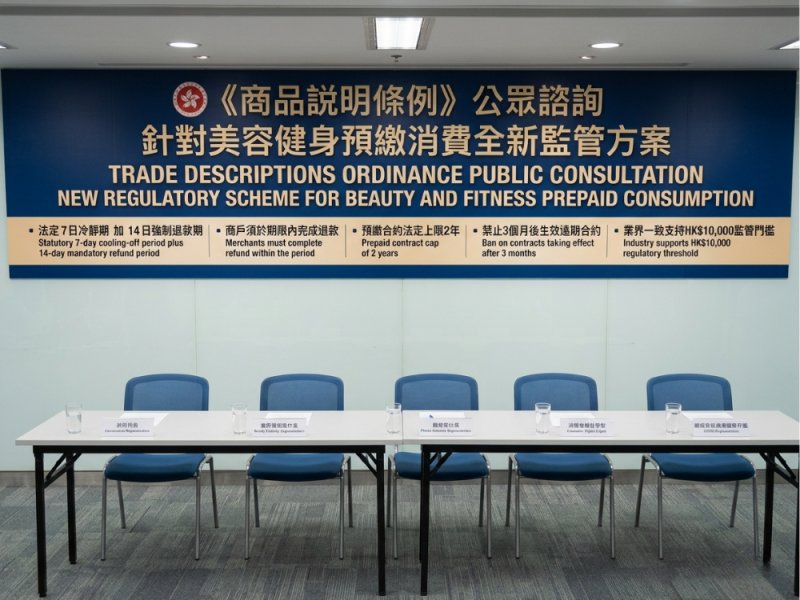
- ‧ Government launched public consultation on Trade Descriptions Ordinance in June 2026, consultation until 31 August
- ‧ Five key amendment proposals: 7-day cooling-off, 14-day refund, 2-year contract cap, ban on forward contracts, enforcement upgrade
- ‧ IQA industry meeting overwhelmingly supports HK$15,000 as regulatory threshold
- ‧ Consumer Council 2021-2025 data: 1,800 annual beauty complaints, over HK$100 million involved
- ‧ Ban on prepaid contracts taking effect after 3 months to eliminate long-cycle loopholes
- ‧ Improper prepayment included in Organized and Serious Crimes Ordinance, Customs can freeze assets
- ‧ LBEDU presidents attending LegCo beauty industry meeting on 16 July
- In June 2026, the Hong Kong government launched a two-month public consultation on the Trade Descriptions Ordinance (until 31 August), introducing five key amendment proposals for beauty and fitness prepaid consumption: statutory 7-day cooling-off period and 14-day mandatory refund, 2-year prepaid contract cap, ban on contracts taking effect after 3 months, and upgraded enforcement powers allowing Customs to freeze assets. The IQA industry meeting overwhelmingly supported HK$15,000 as the regulatory threshold. The Consumer Council fully supports the new rules, with LegCo review commencing in mid-July. LBEDU presidents will attend the LegCo beauty industry meeting on 16 July to directly represent industry views.
2026 HK Pre-paid Beauty Consumption Regulations: 7‑Day Cooling-off period, 14‑Day Refund, 150% Refund, Joint Services
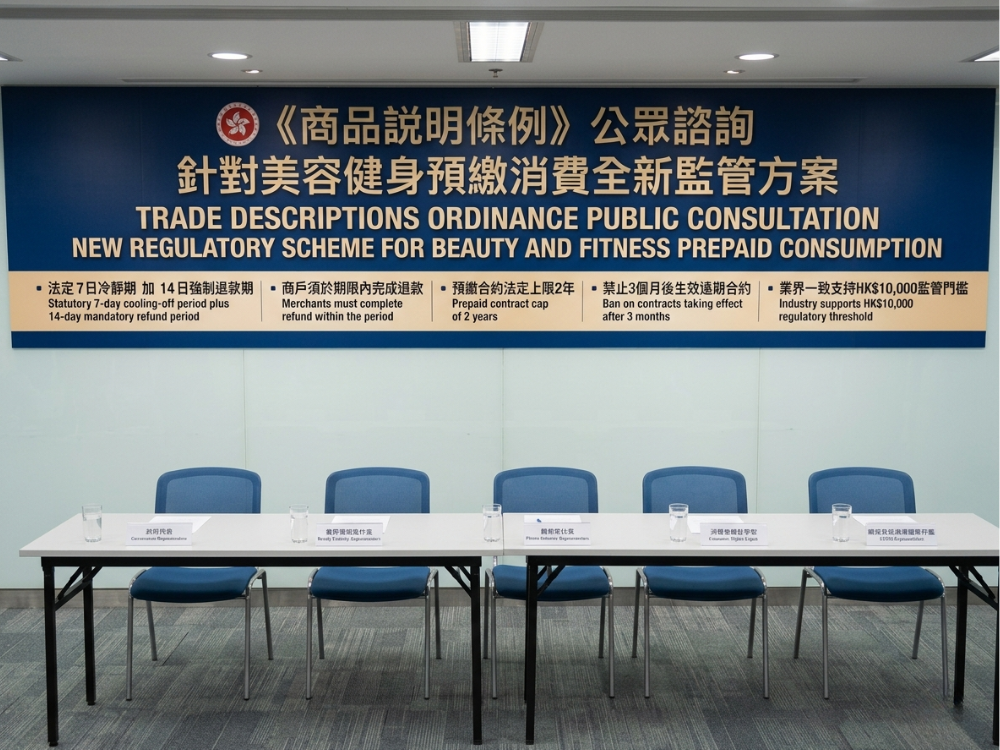 The government officially launches public consultation on prepaid consumption; LegCo to hold review meeting in mid‑July
The government launched a public consultation on amendments to the Trade Descriptions Ordinance in June 2026, proposing to introduce a cooling‑off period through legislation. (Source: Consultation Paper, paras 1.7‑1.8) The industry has since responded to the media, sharing its views on these far‑reaching proposals.
The key focus of this amendment is to revise the Trade Descriptions Ordinance rather than enact an entirely new piece of legislation. However, much of the public discussion — and even some media coverage — has mistakenly treated this as a standalone "cooling‑off period law." In fact, the government is using the existing Trade Descriptions Ordinance as the vehicle to incorporate a mandatory cooling‑off mechanism, while also imposing restrictions on various terms of prepaid contracts, such as contract duration, refund conditions, and administrative fees. This means the new rules are not merely adding a "buyer's remorse" period, but rather imposing comprehensive regulation at the very source of contract structures. (Consultation Paper, paras 3.3‑3.4) After the amendment, merchants offering prepaid service contracts will be required to comply with stricter disclosure and calculation requirements, while consumers will receive clearer legal protections.
The Consultation Paper notes that in September 2024, a major fitness and beauty chain suddenly closed, and Customs received over 2,800 complaints involving a total contract value exceeding HK$140 million, with the single highest claim exceeding HK$2 million. (Consultation Paper, para 2.3) This incident highlighted the risk of substantial financial losses from prepaid consumption and accelerated the government's push for legislative action.
Five Core Amendment Proposals
The amendment targets the beauty and fitness industries, which see the highest number of prepaid‑related complaints, and introduces five strengthened regulatory measures to address long‑standing market loopholes: (Consultation Paper, para 2.8)
| Key Measure | Specific Details |
|---|---|
| 7‑Day Cooling‑Off Period + 14‑Day Mandatory Refund | Consumers have a 7‑day unconditional cancellation period after signing; merchants must complete the refund within 14 days. Used services may be deducted at the regular single‑session price. (paras 4.2, 4.7) |
| Three‑Tier Regulatory Thresholds (under consultation) | Option 1: HK$3,000 or above (covers 80% of complaints) / Option 2: HK$8,000 or above (covers 70%) / Option 3: HK$15,000 or above (covers 60%) (para 4.1) |
| 2‑Year Cap on Prepaid Contracts | Prohibits overly long‑term binding contracts; all prepaid service contracts are capped at a maximum validity of 2 years, extendable by up to 6 months with mutual written consent. (para 5.2) |
| Ban on Forward Contracts with Effect More Than 3 Months Later | Prohibits merchants from signing prepaid contracts that take effect more than 3 months after signing, closing the loophole of long‑lead‑time prepayments. (para 5.3) |
| Enhanced Enforcement Power – Inclusion as a Serious Offence | "Improper acceptance of prepaid payments" will be included under the Organised and Serious Crimes Ordinance, empowering Customs to freeze assets of non‑compliant merchants. (paras 6.1‑6.2) |
Latest Positions of the Legislative Council & Consumer Council
Legislative Council: The Economic Development Affairs Committee will hold a special meeting next Tuesday to review the amendment. DAB legislator Holden Chow has publicly expressed support, believing that the two‑month consultation period is sufficient to balance the interests of all parties and address the unscrupulous sales tactics of a minority of bad actors.
Consumer Council: Fully endorses the new regulatory framework, stating that measures such as the 7‑day cooling‑off period and mandatory refunds are entirely consistent with its long‑standing advocacy directions, helping to reduce consumer disputes and lower the threshold for seeking redress.
IQA Industry‑Wide Seminar – Final Industry Consensus
The IQA International Qualification Assessment Alliance convened an online meeting of beauty industry directors, senior principals, and training representatives from across Hong Kong. Our institute's Principal Joyce Wong, Vice Principal Kenneth Wong, and Director Ivy Tse participated throughout the session.
The meeting opened with five threshold options for discussion. After multiple rounds of data analysis and debate, participants overwhelmingly supported HK$15,000 as the most appropriate regulatory threshold.
- Precise risk segmentation: Amounts below this level are mostly single‑session treatments or light packages, representing routine daily spending; amounts above this level involve long‑term courses and annual equipment packages, which are precisely the high‑risk areas.
- Protects small and medium‑sized neighbourhood shops: Prevents a low threshold from burdening daily operations with excessive compliance procedures.
- Balances consumer rights and industry ecology: Covers the vast majority of high‑risk contracts without leaving a regulatory vacuum.
- Aligns with market spending habits: Matches consumer budgets and mainstream salon package pricing, making it the most acceptable compromise for all three parties.
Historical Industry Representative Opinions – Supplementary Views
Vice Principal Kenneth Wong's Core Stance Across Past Cooling‑Off Period Consultation Meetings
As early as the first public consultation on beauty cooling‑off periods in 2019, and the October 2024 seminar on prepaid consumption regulation, Vice Principal Kenneth Wong attended on multiple occasions as a business representative, consistently advocating for maintaining a healthy operating environment for the industry:
- Questioned comprehensive mandatory legislation: Society should not apply rigid legal rules to all consumer disputes; the industry would merely adapt its tactics to circumvent provisions, failing to address the root causes of conflict.
- Advocated for voluntary industry charters: Drawing on flexible mechanisms like the "Good Employer Charter," with core elements being industry self‑commitment, reputational certification, and market‑driven accountability, as an alternative to blanket legal regulation.
- Believed the timing was premature in earlier years: Between 2019 and 2024, the market lacked unified dispute data, standardised refund calculation methods, and clear regulatory details; hasty legislation would likely lead to implementation chaos.
- Argued for establishing industry standards first, then discussing legal regulation: Prioritise unifying refund criteria, service grading, and prepayment caps, build sufficient data and implementation experience, and then progressively refine the regulations.
Industry Training Team's Projection on the Cooling‑Off Period
Our training team, drawing on years of industry experience, makes a clear projection: after the new law takes effect, cooling‑off period and refund provisions will become more detailed and standardised. As public awareness grows, consumers will more actively demand that practitioners explain contract terms item by item. This means frontline service standards will be comprehensively upgraded — "clearly explaining regulatory provisions, following a standardised contract disclosure process, and professionally addressing rights‑related questions" will become essential competencies, pushing the industry to improve professionalism and transparency.
Collection of Opinions from Industry Organisations
Proposed Refund Calculation Formula:
Refund Amount = Total Contract Value – Market Value of Used Services – Cost of Consumed Gifts – Cost of Used Complimentary Treatments – 5% Administrative Fee on Total Contract Value
Advocates that the 5% administrative fee should only cover the merchant's actual operating costs while discouraging malicious cancellation attempts.
Five Core Demands:
- Relax regulatory oversight on small‑value prepayments for light beauty services (nails, lashes); support the HK$15,000 threshold
- Establish dedicated deduction rules for customised, irreversible services; cancellations after completion should be charged at full regular price
- Do not agree to capping administrative fees at 2%‑5%, given store operating costs and bank transaction fees
- Support contract duration limits and the ban on forward contracts to promote orderly development of the light beauty sector
- Call for the introduction of dedicated compliance guidelines and free simplified contract templates for micro‑ and small‑sized shops
Paragraph 4.9 of the Consultation Paper proposes that for non‑cash lump‑sum payments, merchants may deduct up to 2% of the transaction amount as an administrative fee; for instalment payments, the cap is 5%. The problem is that banks themselves charge processing fees on such transactions, with rates varying according to the instalment period — ranging from approximately 3% to as high as 11%. If a consumer chooses a 36‑month instalment plan, the bank fee can reach 11% of the transaction amount. Should the contract be cancelled, the law would only allow the merchant to deduct up to 5% in administrative fees, yet the bank would still take the full processing fee — meaning the merchant not only fails to recover the administrative fee but may actually have to "absorb" the bank fee difference. For example: on a HK$10,000 transaction, the bank takes HK$1,100 in processing fees, but the merchant can only deduct HK$500 in administrative fees, leaving HK$600 to be borne by the merchant. This effectively penalises law‑abiding merchants, contradicting the "non‑punitive" legislative intent of the ordinance. The industry urges the authorities to address this loophole and clarify the allocation of bank charges versus administrative fees to prevent compliant merchants from suffering unreasonable losses.
Paragraph 4.8 of the Consultation Paper stipulates that if a consumer uses a service during the cooling‑off period and then cancels, the merchant may charge for the used service at the pre‑discount single‑session price, but the deduction cannot exceed 150% of the pro‑rata unit price or the actual cost of the used service. To illustrate: suppose a single session is priced at HK$2,000, and a 10‑session package is offered at 50% off (i.e., HK$1,000 per session, totaling HK$10,000). After using one session, the consumer cancels. Logically, the deduction should be the single‑session price of HK$2,000. However, the new rules cap the deduction at 150% of the average price (HK$1,000), i.e., at most HK$1,500. This means merchants cannot recover the full value of the service already provided, effectively encouraging consumers to purchase large packages and cancel at will, while forcing merchants to limit discounts to no less than 25% off, otherwise risking losses. The industry believes that a 200% cap (i.e., up to HK$2,000, matching the single‑session price) would be more reasonable. (Consultation Paper, para 4.8) However, an even bigger implementation challenge lies in the refund process — how financial institutions would cooperate in deducting the cost of used services rather than issuing a full refund remains unclear, and requires further clarification from the government.
Nine Key Discussion Topics – Industry Opinion Record
- Regulatory Threshold: Unanimously confirmed HK$15,000 as the optimal solution; recommended that the government include it as a reference in the consultation.
- 7‑Day Cooling‑Off Period Details: Counted from the date of signing; 14‑day refund period counted in working days; used services deducted at the regular single‑session price; electronic payment processing fees to be borne by the merchant. (paras 4.2, 4.7)
- 2‑Year Contract Cap: Renewals treated as new contracts with a fresh cooling‑off period; suggested adding an anti‑splitting clause — multiple contracts signed by the same customer within 30 days to be consolidated. (paras 5.2, 5.4)
- Closing the Name‑Change Loophole: Judged by the actual nature of services provided; all establishments to be regulated regardless of shop name. (paras 3.7‑3.8)
- SME Compliance Support: Recommend that the government provide free standardised contract templates and compliance training.
- Unscrupulous Sales Regulation: Explicitly prohibit high‑pressure tactics such as "today‑only limited‑time offers" and "buy now or prices increase."
- Closure and Transfer Rights Protection: Explore options such as prepayment escrow and industry compensation funds.
- Differentiated Regulation for Accredited Institutions: Propose positive incentives — institutions holding international accreditations to receive compliance flexibility.
- Industry Professionalisation Upgrade: Recommend that the government expand CEF coverage for beauty professional courses and encourage practitioners to obtain official and international qualifications.
Five‑Year Complaint Data – The Real Market Problems Behind the Amendment
According to the Consumer Council and Customs statistics for 2021‑2025: (Consultation Paper, paras 2.3, 4.1)
Approx. 1,800 beauty service prepaid‑related complaints annually
Approx. 1,200 fitness service prepaid‑related complaints annually
Over HK$100 million in disputed amounts across both industries each year
Key dispute scenarios: merchant closures and transfers, high‑pressure prepayment solicitation, concealed contract terms, refund refusals, and long‑term contract lock‑ins.
Three Practical Self‑Protection Methods for Consumers Before the New Law Takes Effect
- Prioritise practitioners with international certifications: ITEC, VTCT, IQA and similar accreditations are core standards of professionalism and trustworthiness.
- Choose IQA World or Foammall QS‑certified beauty salons: These establishments have undergone third‑party audits covering staff qualifications, equipment, hygiene standards, and contract transparency.
- The Four Signing Principles: Refuse on‑the‑spot pressure sales; do not sign forward contracts that take effect more than three months later; avoid making large lump‑sum prepayments; and always keep a complete copy of the contract and receipt.
Industry Development Watershed – Professionalisation Determines Survival
- Grey‑market operators: Those relying on high‑pressure sales, frequent name changes, and staff without professional qualifications → will be gradually phased out.
- Professional operators: Those holding international certifications, maintaining transparent contracts, and building their business on skill and reputation → will become the industry mainstream.
In the future, the core competitiveness of the beauty industry will shift from sales techniques to professional qualifications, technical expertise, and compliant operations.
LBEDU Official Stance & Industry Engagement
- Only offers HKQF, ITEC, VTCT, and IQA official/internationally recognised courses to ensure the value of students' qualifications
- Actively promotes IQA and Foammall professional salon certification systems to establish positive industry standards
- Fully engages in industry policy discussions, giving voice to frontline SMEs and practitioners
Major Announcement: Principal Joyce Wong, Vice Principal Kenneth Wong, and Director Ivy Tse will attend a dedicated beauty industry meeting with Legislative Council member Shiu Ka‑fai on 16 July 2026, where they will directly submit the industry's recommendations.
Frequently Asked Questions
Sources
Commerce and Economic Development Bureau – Trade Descriptions Ordinance Prepaid Consumption Public Consultation Document (June 2026) (full document, 41 pages; consultation period ends 31 August 2026)
Consumer Council Official Response Statement and 2021‑2025 Complaint Data Report
IQA International Qualification Assessment Alliance 2026 Mid‑Year Industry Seminar Minutes
Legislative Council Economic Development Affairs Committee Meeting Agenda Documents
2019 First Round Beauty Cooling‑Off Period Public Consultation Meeting Minutes
October 2024 Prepaid Consumption Regulation Industry Seminar Minutes
Frontline Operational Feedback from Yaffa Soft Glow Studio and Ruby's Nail and Eye Care (RNEC)
Comments (0)
No comments yet
Leave a Comment